
Fashion has always been a playground of imagination and invention, a place where culture, art, and identity intertwine. But today, a new rhythm pulses through the loom of creativity: technology. In recent years, the age-old craft of clothing has been transformed by the magic of innovation, from 3D printing’s sculptural wonders to the subtle intelligence woven into smart fabrics. Together, they are reshaping not just what we wear, but how we live.
From Sketch to Reality: The Rise of 3D Printing

Imagine a world where the boundaries of fabric are redefined, where the pen-to-paper design suddenly leaps into three-dimensional reality, layer by intricate layer. This is the promise of 3D printing — a method that allows designers to breathe life into digital dreams.
Fashion visionary Iris Van Herpen has mastered this alchemy. Her Meta Morphism Collection defies gravity, blending the ethereal with the structural through delicate yet bold 3D-printed elements. Such creations are no longer limited by traditional sewing or cutting; instead, they emerge as wearable sculptures, crafted with precision and daring imagination.
3D printing is no longer confined to the realm of sci-fi or industrial manufacturing — it is becoming accessible, a tool in the hands of designers who crave to push the limits of form, texture, and possibility.
The Future is Smart: How Smart Fabrics Are Changing the Game
While 3D printing shapes garments from the outside, smart fabrics transform the very essence of textiles from within. These fabrics are alive with technology — responsive, interactive, and intuitive.
Imagine clothing that doesn’t just cover you but understands you. Moisture-wicking to keep you dry, temperature-regulating to cradle you in comfort, even fabrics that track your heartbeat, breathing, and movement in real-time. Clothes that gently vibrate to guide your yoga poses, socks that analyze your stride to improve your run, and jackets that conduct electricity, blending durability with futuristic flair.
Products like Nadi X yoga pants pulse with gentle sensors, Sensoria Smart Socks listen to your footsteps, and the Vollebak Graphene Jacket melds resilience with electrical conductivity. Each tells a story of innovation woven seamlessly into everyday life.
Price and Progress: The Cost of Cutting-Edge Couture
Innovation, as brilliant as it is, often arrives with a price tag. These smart textiles, layered with sensors and powered by embedded electronics, command prices that reflect their complexity—from high hundreds to nearly a thousand dollars.
Levi’s Commuter Trucker Jacket with Jacquard, for example, allows you to control your smartphone with a swipe of your sleeve, a nod to the future of connected living priced around $198. But this technology isn’t just about convenience — it’s about a new relationship with what we wear and how we interact with the world.

Nadi X” yoga pants have built-in sensors that vibrate to guide wearers into proper yoga positions. Another is the “Oura” ring, which tracks sleep patterns and provides personalized recommendations for improving sleep quality.
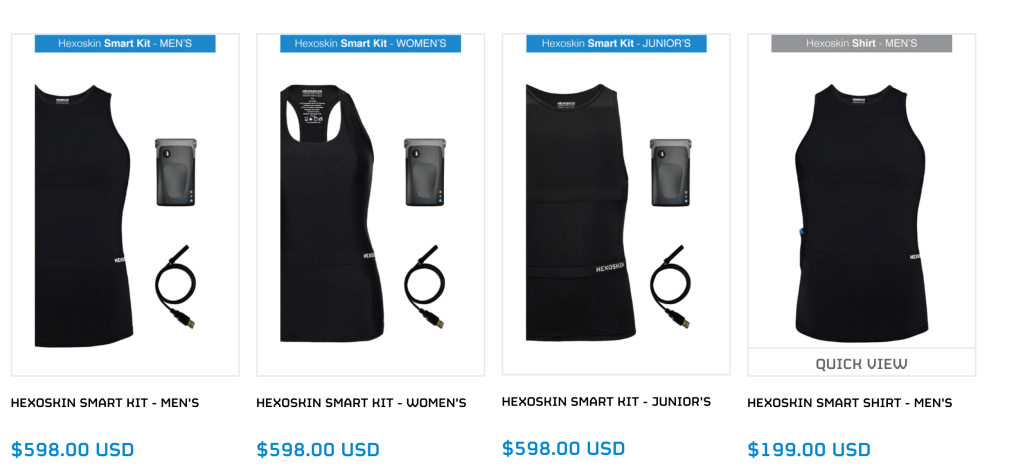
Hexoskin Smart Shirts are made with a smart fabric that tracks your heart rate, breathing rate, and movement in real time. The data is sent to your smartphone or smartwatch, allowing you to monitor your fitness levels and make adjustments as needed. The shirts cost anywhere from $199 to $598.

Vollebak Graphene Jacket is made with a graphene-coated smart fabric that can conduct electricity. It’s designed to be ultra-durable and weather-resistant, making it ideal for outdoor activities. The jacket costs around $695.

Sensoria Smart Socks are made with a smart fabric that can monitor your running technique, including foot landing and stride length. The data is sent to your smartphone, allowing you to track your progress and make improvements. A pair of Sensoria Smart Socks costs around $199.

Myontec Mbody Shorts are made with a smart fabric that can track your muscle activity and fatigue during exercise. The data is sent to your smartphone or tablet, allowing you to monitor your performance and adjust your workout as needed. The shorts cost around $699.
Levi’s Commuter Trucker Jacket with Jacquard is made with a smart fabric that allows you to control your phone and other devices with simple gestures, like swiping or tapping the sleeve. It’s designed for cyclists and commuters who need to stay connected while on the go. The jacket costs around $198.
It’s worth noting that the prices for smart fabrics can vary widely depending on the complexity of the technology involved. Additionally, some smart fabrics require additional hardware, like sensors or batteries, which can also impact the overall cost.
Sustainability and Ethical Concerns: The Dark Side of Fashion Tech
Yet, as dazzling as these innovations are, the industry faces hard questions. 3D printing demands significant energy and often uses plastics that linger far beyond their moment of beauty. Smart fabrics, with their electronic guts, pose challenges for recycling and raise concerns about e-waste.
Beyond the environmental impact lies the human cost — the risk of exploitation in global supply chains and the need for mindful innovation that respects both people and planet.
Fashion tech must evolve with responsibility, balancing its drive for progress with deep ethical awareness.
The Promise and Peril of Wearable Technology in Clothing
The potential is breathtaking. Imagine clothing that could monitor your health and alert you before trouble arises, garments that adjust themselves to climate changes, or fabrics that power your devices, turning you into your own mobile energy source.
But the future also carries questions. Who owns the intimate data these clothes collect? How do we protect our privacy in a world where our jacket knows our heartbeat? And what becomes of these high-tech textiles when their time is up?
These are the conversations fashion must have as it strides boldly forward.
Looking Ahead: The Future of Fashion Tech
As 3D printing and smart fabrics continue their rapid evolution, the fashion landscape promises to be unrecognizable yet thrillingly intimate. Imagine a day when you can design and print a custom dress at home or wear clothes that anticipate your needs and moods.
Beyond these, nascent technologies like nanotech and biodesign loom on the horizon, while virtual and augmented reality reshape the way we shop, wear, and experience clothing.
Fashion has always been a mirror of the times, and now, more than ever, it reflects our ceaseless drive to innovate, connect, and feel alive in what we wear.
While the price of this innovation may keep it out of reach for many, the allure of smart fabrics and 3D printing lies in their promise to transform clothing from passive coverings into active companions. And if your budget can’t yet afford a jacket that charges your phone or socks that analyze your stride, don’t worry — timeless style and performance remain alive in the simple touch of traditional fabric, woven by hands and hearts.
 Words Have Power